
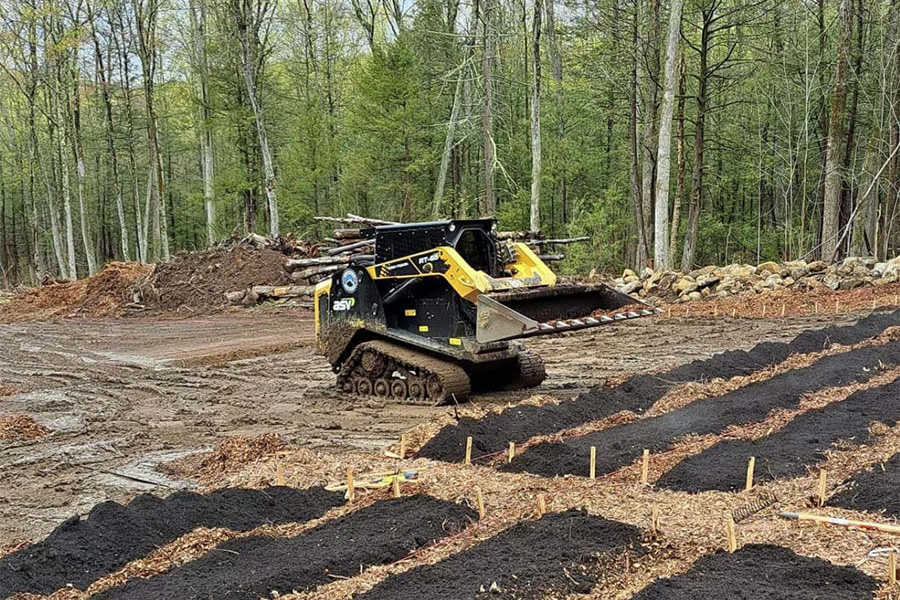
Taming the Slopes: How Proper Site Grading Prevents Severe Soil Erosion on CT Properties
Connecticut’s picturesque rolling hills and forested terrain add undeniable character to local properties. However, sloped acreage presents significant land management challenges. Heavy New England spring rains, rapid snowmelt, and unmanaged surface runoff can quickly transform subtle hillsides into rushing streams, carving deep gullies through yards, washing away expensive topsoil, and destabilizing driveways and retaining structures.
Site grading is not just an aesthetic task designed to smooth out your lawn—it is a critical earth-engineering process that dictates how water travels across your land. Here is how professional rough and final grading protects your property value and long-term land investment:
1. Redirecting Surface Runoff Away from Structures
Water follows the path of least resistance. When a property lacks proper pitch, heavy rainfall flows toward low points—often pooling against home foundations, garage aprons, or basement walls. Professional grading resculpts the contours of your yard, establishing gentle slopes, swales, and pitches that channel rainwater safely around your structures and direct it toward designated drainage outlets or natural retention areas.
2. Eliminating Erosion and Washout Hotspots
Steep, unmaintained banks are particularly vulnerable to erosion. As water strips topsoil away, tree roots become exposed, slopes weaken, and soil slumps during severe weather events. Earthmoving professionals can resculpt aggressive inclines into stable, manageable terraces or gentler, uniform slopes that disperse water momentum and anchor soil firmly in place.
3. Protecting Driveways and Access Roads
Gravel driveways on sloped terrain are notoriously prone to washouts during heavy rainstorms. Water flowing down the center or sides of a driveway strips expensive gravel away, leaving deep, hazardous ruts behind. Strategic re-grading—incorporating proper driveway crowning, shoulder swales, and culverts—ensures water sheets cleanly off the driveway surface into adjacent drainage channels rather than carrying your driveway down the hill.
4. Establishing a Stable Sub-Base for Landscaping and Hardscaping
Whether you plan to plant a lush lawn, install a patio, or build a retaining wall, laying materials over improperly graded ground leads to settling, shifting, and structural failure. Professional site grading establishes a rock-solid, properly drained sub-base, allowing topsoil, sod, and hardscape features to root firmly and endure for decades without settling or washing out.
If seasonal rains are carving channels through your property or leaving standing water in your yard, a targeted site grading strategy will secure your land, protect your foundation, and give you back total use of your acreage.