
From Construction Zone to Lush Lawn: The Restoration Process
Major dirtwork—whether for utility trenching, land clearing, drainage installation, or home additions—is an essential investment in your property. But once the heavy machinery rolls away, property owners are often left looking at a stark reality: rutted ground, churned-up clay, destroyed turf, and compacted soil.
Heavy machinery weighing thousands of pounds severely alters the structure of your yard. Left unaddressed, compacted earth acts like concrete, preventing water, oxygen, and nutrients from reaching plant roots.
Restoring your property isn’t as simple as throwing down grass seed over tire ruts. Here is how professional contractors take a site from a torn-up construction zone back to a smooth, thriving, lush lawn.
Step 1: Subsoil Decompaction & Deep Ripping
The primary reason lawns fail post-construction is soil compaction. Excavators, skid steers, and dump trucks pack down the earth deep beneath the surface, destroying air pockets and killing natural soil biology.
Before applying topsoil or seed, contractors use specialized equipment like shank rippers or deep-tilling attachments on heavy machinery to break up the dense, compacted subsoil 6 to 12 inches deep.
-
Why it matters: Deep decompaction restores internal soil drainage and allows new grass roots to penetrate deep into the ground rather than growing weak, shallow root systems that die off in summer heat.
Step 2: Clearing Debris & Rough Grading
Excavation frequently pulls up buried rocks, roots, and hard clay chunks.
The restoration team picks through the disturbed area to remove larger debris that would interfere with lawn mowers or cause uneven spots later. Once clear, heavy equipment performs rough grading—smoothing out tire ruts, filling in settling trenches, and re-establishing the intended contours of the land.
Step 3: Screened Topsoil Application & Fine Grading
Subsoil provides foundation support, but topsoil feeds plant life. Heavy excavation often buries or strips away the nutrient-rich top layer of earth, exposing barren sub-layers.
-
Topsoil Spreading: A uniform 2-to-4-inch layer of high-quality, screened topsoil (rich in organic matter) is spread across the entire restoration area.
-
Fine Grading: Contractors use precision landscape rakes and grading bars to blend the new topsoil smoothly into surrounding, undisturbed areas of the lawn.
This phase eliminates subtle dips and bumps, ensuring an even, seamless transition across your entire yard.
Step 4: Seeding, Hydroseeding, or Sodding
With a smooth, nutrient-dense seedbed established, it’s time to re-establish the turf:
-
Broadcast Seeding & Straw: Premium turf grass seed mixed for local climate conditions is evenly broadcast. The seedbed is lightly rolled to ensure optimal seed-to-soil contact, then covered with clean straw or erosion control blankets to retain moisture and deter birds.
-
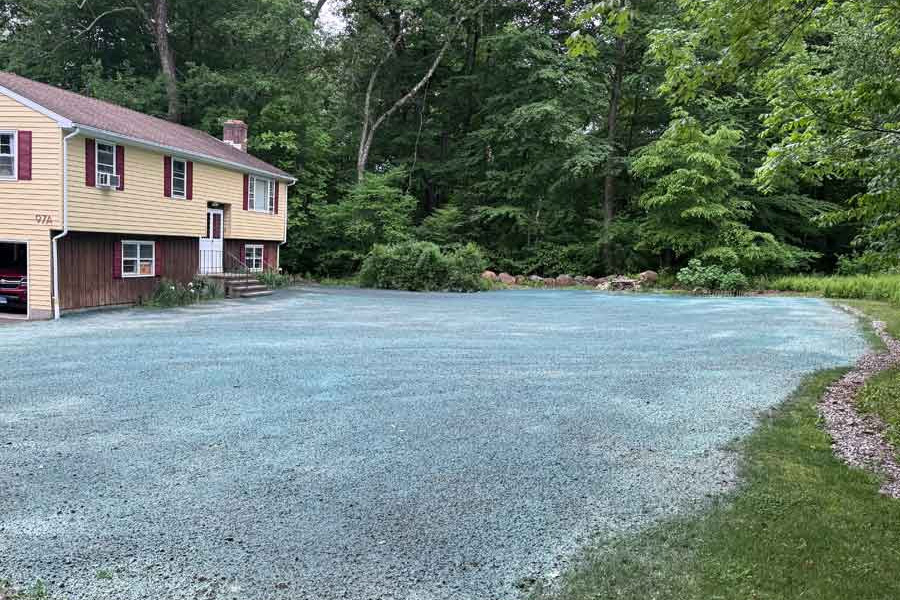
Hydroseeding: A pressurized slurry of seed, mulch, fertilizer, and tackifier (soil binder) is sprayed across the soil. Excellent for large areas and sloped ground prone to washouts.
-
Sod Installation: Instant grass mats laid over the freshly graded topsoil for an immediate, high-impact finish.
Bringing Your Yard Back to Life
Excavation work doesn’t have to ruin your curb appeal permanently. By treating soil decompaction, site grading, topsoil distribution, and seeding as a complete system, your property can recover quickly—often coming back healthier and smoother than it was before the project began.
Need Your Lawn Restored After Dirtwork?
Contact Northwest Dirtworks today to request a lawn restoration estimate.