
Stop Standing Water: Key Yard Drainage Solutions for Heavy Rains
Heavy rains can turn a beautiful yard into a soggy, muddy headache overnight. But standing water isn’t just an eyesores—it poses a real threat to your property’s structural integrity.
When excess groundwater collects around your home, it places hydrostatic pressure on foundation walls, risks seeping into basements or crawlspaces, kills lawn turf, and washes away valuable topsoil.
Implementing the right drainage and water mitigation strategies keeps your landscape dry and protects your investment. Here is how expert site work addresses standing water before it causes costly damage.
Identifying the Cause of Standing Water
Before installing hardware, it’s essential to understand why water is pooling in your yard:
-
Poor Soil Composition: Soil high in clay drains slowly, causing surface water to collect rather than absorb.
-
Improper Site Grading: Low spots in your lawn naturally pull runoff toward them, especially if the ground slopes toward your house instead of away.
-
High Water Table: Shallow groundwater layers prevent heavy rainfall from sinking deep into the earth.
-
Roof Runoff Misdirection: Downspouts dumping water directly at the base of your foundation without adequate discharge piping.
4 Effective Yard Drainage Solutions
Depending on your slope, soil type, and the severity of the flooding, professional earthmovers utilize specific systems to collect and reroute groundwater.
1. French Drains (Subsurface Water Control)
A French drain is designed to tackle saturated soil and underground water buildup.
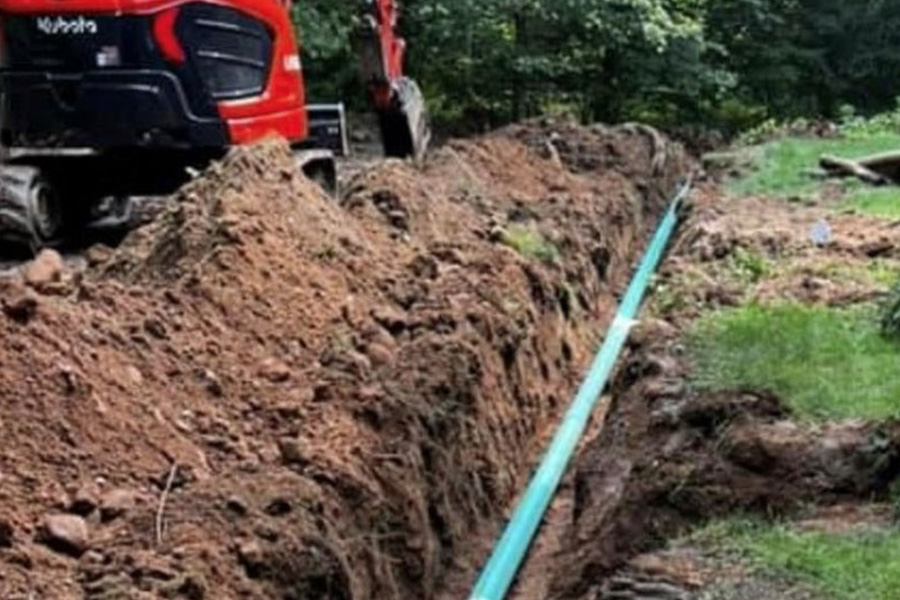
A trench is excavated, lined with geotextile filter fabric, and fitted with a perforated pipe surrounded by drain rock. Groundwater naturally flows into the trench, enters the pipe, and travels safely away from your home’s footprint toward a dedicated discharge point.
Best for: Soggy lawns, squishy turf, and protecting foundation walls from subterranean groundwater pressure.
2. Catch Basins & Swales (Surface Water Management)
When heavy downpours create standing ponds on your lawn or driveway, surface water collection is key.
-
Catch Basins: In-ground basins topped with grates placed in low points to catch fast-moving surface runoff and channel it into underground solid pipes.
-
Dry Swales: Broad, shallow vegetated ditches gently carved into the landscape to direct water flow naturally following your land’s topography.
Best for: Low spots in lawns, driveway runoff, and large surface pooling.
3. Downspout Underground Extension Lines
Standard downspout splash blocks often spill water right next to foundation walls. Connecting gutter downspouts to subterranean smooth-wall PVC lines routes roof runoff dozens (or hundreds) of feet away from your home toward daylight or a dry well.
Best for: Basement flooding prevention and keeping foundation perimeter soils dry.
4. Precision Laser Grading & Soil Reshaping
Sometimes the simplest solution is changing the shape of the land. Using excavators and skid steers guided by laser levels, contractors slope the ground away from structures at a minimal 2% grade (a 2-inch drop for every 10 feet).
Best for: New builds, major lawn overhauls, and persistent pooling near house foundations.
Don’t Wait for the Next Big Storm
Water mitigation is always cheaper before structural damage occurs. Patching foundation cracks or restoring flooded basements costs significantly more than putting proper drainage infrastructure underground today.
Keep Your Property High & Dry
Contact Northwest Dirtworks today to schedule a drainage assessment and protect your site from heavy rain damage.